

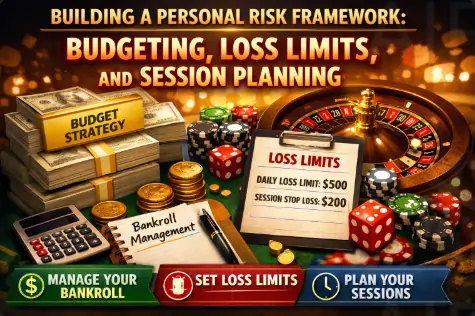
Online gambling is designed to be engaging, fast-paced, and accessible. With mobile platforms operating 24/7 across Southeast Asia, players can deposit, play, and withdraw within minutes.
While this accessibility offers convenience, it also increases financial and behavioral risks if participation is not structured.
A personal risk framework is a proactive system that protects your finances, mental well-being, and long-term stability. It combines budgeting discipline, loss limitation, session planning, and behavioral awareness into a structured control mechanism.
At 18Club SG Promotions, our player protection framework prioritizes transparency, compliance awareness, and responsible participation. This guide explains how to build a sustainable system that allows gambling to remain entertainment, not financial stress.
For foundational principles, explore our responsible gaming hub:
What Is a Personal Risk Framework?
A personal risk framework is a predefined set of rules you establish before gambling. It removes emotional decision-making by creating boundaries in advance.
It answers five key questions:
- How much can I afford to allocate for entertainment?
- What is my maximum acceptable loss?
- How long will I play per session?
- What signals indicate I should stop?
- How will I track my activity?
According to the National Council on Problem Gambling, structured limit-setting significantly lowers the probability of problematic gambling behavior.
Without a personal risk framework, players are more likely to:
- Increase bets after losses
- Extend sessions beyond intended limits
- Justify additional deposits
- Gamble during emotional distress
- Lose track of total monthly spending
A personal risk framework transforms gambling from impulsive behavior into structured recreation.
The Psychology Behind Gambling Risk
Before discussing budgeting mechanics, it’s important to understand psychological triggers.
Online gambling activities:
- Dopamine reward systems
- Near-miss cognitive bias
- Loss-chasing impulses
- Overconfidence after wins
These neurological effects can override rational financial thinking. This is why structured controls are essential — not optional.
Regulatory bodies such as the UK Gambling Commission emphasize proactive harm prevention rather than reactive intervention.
A framework protects players from cognitive distortions such as:
- “I’m due for a win.”
- “I just need one more round.”
- “I can recover this loss.”
- “It’s not that much.”
Step 1: Financial Budgeting – The Foundation of Risk Control
A gambling budget must only come from disposable income — never from essential funds.
What Is Disposable Income?
Disposable income is money remaining after:
- Housing expenses
- Food and transportation
- Debt obligations
- Insurance
- Savings contributions
- Family responsibilities
If gambling interferes with any of these categories, your risk framework is failing.
The 5-Tier Budget Allocation Method
Tier 1: Essentials First
100% of living expenses must be secured before entertainment allocation.
Tier 2: Emergency Fund
Maintain 3–6 months of living expenses in savings before regular gambling participation.
Tier 3: Long-Term Savings
At least 10–20% of income should go toward long-term savings or investments.
Tier 4: Entertainment Category
Only after the above tiers are fulfilled should gambling be considered.
Tier 5: Fixed Monthly Gambling Cap
This amount must remain constant regardless of wins or losses.
Example Budget Framework
Monthly Income: SGD 3,000
Expenses: SGD 2,300
Savings: SGD 400
Remaining Disposable: SGD 300
Entertainment Allocation (5%): SGD 150
Gambling Allocation (within entertainment): SGD 50–80
Once spent, no top-ups until next cycle.
This fixed-limit approach prevents budget creep — a common issue among casual players.
Step 2: Structured Loss Limits
A loss limit is your maximum acceptable loss before stopping.
It removes emotional negotiation from decision-making.
There are three critical layers:
1️⃣ Session Loss Limit
Set a strict per-session cap.
Example:
“I will stop after losing SGD 30 in one session.”
This prevents extended chasing.
2️⃣ Daily Loss Cap
If you split sessions across the day, total losses must not exceed your daily threshold.
Example:
Two sessions at SGD 20 each. Stop after SGD 40 total loss.
3️⃣ Monthly Hard Stop
Once your monthly gambling allocation is exhausted, you must stop completely.
No borrowing.
No transferring from savings.
No emergency reallocation.
Why Loss Chasing Is Dangerous
Loss chasing escalates risk because:
- Bet sizes increase irrationally.
- Emotional stress impairs judgment.
- Decision-making becomes reactive.
Step 3: Time-Based Session Planning
Time is often overlooked in gambling control.
Prolonged sessions increase:
- Emotional fatigue
- Cognitive errors
- Financial exposure
- Impulsive betting
Ideal Session Structure
- 30–90 minutes maximum
- Pre-set alarm timer
- Mandatory 10-minute break
- No late-night play
- Avoid gambling when stressed, tired, or intoxicated
Why Session Planning Works
Short sessions:
- Maintain rational thinking
- Reduce escalation patterns
- Protect mental clarity
- Improve financial awareness
When sessions become open-ended, risk increases exponentially.
Step 4: Stop-Win Rules – Protecting Profits
Most players focus only on stopping losses. However, protecting wins is equally important.
Winning sessions create overconfidence.
Example Stop-Win Rule:
“If I double my session budget, I withdraw and stop.”
Without a stop-win rule:
- Profits are often returned to gameplay.
- Emotional optimism overrides discipline.
A structured framework protects both downside and upside.
Step 5: Activity Tracking and Behavioral Monitoring
Tracking transforms gambling into measurable data.
Maintain a simple record:
- Date
- Deposit amount
- Win or lose
- Session duration
- Emotional state
Tracking reveals:
- Frequency increases
- Escalating bet sizes
- Emotional triggers
- Pattern shifts
Self-awareness reduces risk.
If concerning patterns appear, consider support services such as the National Addictions Management Service.
Step 6: Emotional and Environmental Risk Factors
Gambling behavior is often influenced by:
- Financial stress
- Relationship conflict
- Work pressure
- Boredom
- Loneliness
Never gamble to escape negative emotions.
Gambling should only occur when:
- You feel calm and clear-headed
- You are financially stable
- You are not influenced by substances
- You are not seeking emotional relief
Step 7: Technology Controls and Account Tools
Many platforms offer built-in safeguards:
- Deposit limits
- Loss limits
- Reality check reminders
- Cooling-off periods
- Self-exclusion tools
Using these tools strengthens your framework.
Risk Escalation Indicators
Immediate review of your framework is required if you:
- Increase deposits mid-month
- Feel anxiety when unable to play
- Hide gambling behavior
- Borrow funds
- Rationalize repeated losses
- Neglect responsibilities
Early intervention prevents long-term financial harm.
Southeast Asia Market Context
With increasing digital payment integration and mobile accessibility across Southeast Asia, gambling access has become frictionless.
Risks now include:
- Instant top-ups
- Aggressive bonus marketing
- 24/7 accessibility
- Influencer-driven hype
A personal framework protects players from high-frequency engagement traps.
For regulatory insights and regional analysis.
Long-Term Benefits of a Personal Risk Framework
✔ Preserves financial stability
✔ Reduces emotional volatility
✔ Prevents debt accumulation
✔ Maintains gambling as entertainment
✔ Strengthens personal accountability
✔ Supports compliance awareness
A structured system empowers players instead of restricting them.
Final Thoughts
Building a personal risk framework is not about limiting enjoyment — it is about creating structure, discipline, and long-term financial protection.
When gambling is approached with a defined budget, clearly established loss limits, structured session planning, and consistent activity tracking, it remains controlled entertainment rather than a source of stress.
The key is preparation before participation: decide your limits before depositing, define your stop-loss and stop-win thresholds before playing, and commit to stopping when those limits are reached.
Responsible gambling is not based on luck or willpower alone; it is built on intentional systems that protect both your finances and mental well-being. In today’s fast-paced digital gambling environment, self-regulation is your most powerful safeguard.
A structured personal risk framework ensures that gambling stays within your control — not the other way around.